
Crypto SIP vs Mutual Fund SIP: Which Is Better for Indian Investors in 2026?
Three parallel SIP ecosystems now operate in India, not two. One is the SEBI-regulated mutual fund SIP used by 9.72 crore investors. The second is the spot crypto SIP, growing at 59% year-on-year on platforms like CoinDCX and Mudrex. The third is the one most blogs ignore entirely: the managed crypto derivatives fund, which sits under a completely different section of the Income Tax Act and produces a materially different net-of-tax outcome.
Any serious comparison in 2026 must include all three. The tax treatment alone separates them by margins most investors never see until they file their ITR.
How a Mutual Fund SIP Works
A mutual fund SIP automates the purchase of fund units at fixed intervals, typically monthly. The investor selects a scheme, sets an amount, and the bank auto-debits on a fixed date. Units are allotted at the prevailing NAV. Over time, the investor accumulates units at different price points, averaging the cost of acquisition.
AMFI data from March 2026 confirms the scale: ₹32,087 crore flowed into mutual fund SIPs that month, across 9.72 crore active accounts. The 10-year SIP XIRR for equity mutual funds in India averages 12–15%. Top-performing small-cap and mid-cap schemes have delivered 20–24% XIRR over the same window.
Mutual fund SIPs are governed by SEBI. Fund houses publish daily NAV. Expense ratios are capped. Investors have regulatory recourse. The infrastructure is mature, the data is abundant, and the tax treatment is favourable — a point that matters more than most investors realise.
How a Spot Crypto SIP Works
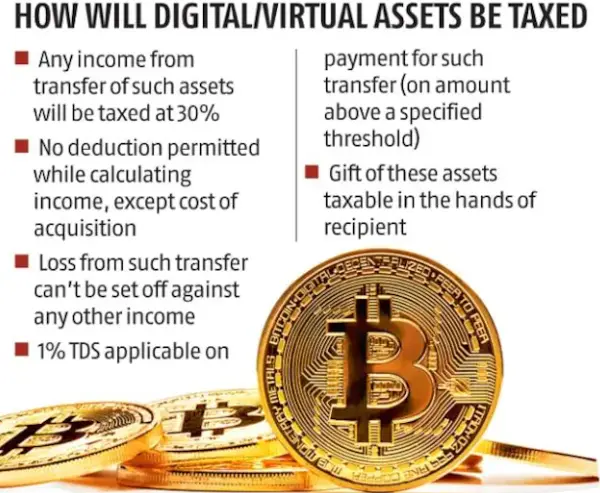
A spot crypto SIP uses the same mechanism, fixed amount, fixed interval, automated purchase — but the asset bought is a cryptocurrency directly held by the investor. Bitcoin, Ethereum, and Solana are the most common picks on Indian platforms.
The growth numbers are real: CoinDCX created 5.72 lakh crypto SIPs in 2025, most starting at ₹100 per month. CoinSwitch reported a 59% rise in new SIP registrations. Mudrex recorded a 220% rise in fresh SIP openings, with average monthly contributions between ₹4,000 and ₹6,000 by late 2025.
The underlying logic mirrors mutual fund SIP: rupee cost averaging across volatile price points. The difference is the degree of volatility. A mutual fund NAV might move 1–3% in a month. Bitcoin can move 20–30% in the same period.
The Third Vehicle: Managed Crypto Derivatives Fund
A crypto derivatives fund does not hold Bitcoin or Ethereum directly. It enters futures and options contracts whose value is derived from crypto prices, contracts that settle in cash rather than by delivery of the underlying asset. This structural choice produces a fundamentally different tax outcome under Indian law.
Spot crypto falls under Section 115BBH of the Income Tax Act: a flat 30% rate plus 4% cess, with no concessional long-term treatment and no loss offset permitted. Crypto derivatives fall under Sections 43(5) and 73 as speculative business income; taxed at the investor's applicable slab rate, with legitimate business expenses deductible, losses available for set-off against other speculative income, and four-year loss carry-forward. Parliament reaffirmed this classification in Budget 2026.
This is not aggressive tax planning. It is the literal language of the Income Tax Act, applied to two different classes of financial instrument.
The Three-Way Comparison
The differences between the three vehicles span the same ten dimensions most investors use to evaluate any investment product. The table below presents them without editorialising.
Dimension | Mutual Fund SIP | Spot Crypto SIP | Managed Crypto Derivatives Fund |
Governing law | SEBI, AMFI framework | Section 115BBH (VDA) | Section 43(5), 73 (speculative business income) |
Short-term tax rate | 20% STCG (equity, <12 months) | 30% flat + 4% cess | Applicable slab rate (5 / 20 / 30%) |
Long-term tax rate | 12.5% LTCG after ₹1.25 lakh exemption | 30% flat + 4% cess (no holding-period benefit) | Slab rate (no VDA classification) |
Expense deductions | Embedded in NAV | Only cost of acquisition | All legitimate business expenses |
Loss set-off | Allowed against other capital gains | Not allowed against any income | Allowed against other speculative income |
Loss carry-forward | 8 years (STCG/LTCG rules) | Not allowed | 4 years |
TDS | None on SIP purchases | 1% on every transfer > ₹10,000 (Section 194S) | Not applicable |
ITR form | ITR-2 | ITR-2 (Schedule VDA) | ITR-3 |
Custody | SEBI-regulated custodian | Exchange wallet or self-custody | Institutional custody (e.g. Fireblocks MPC) |
Regulatory recourse | SEBI grievance mechanism | No VDA-specific regulator | PMLA / FIU framework via fund infrastructure |
Two rows in this table carry most of the economic weight: the tax rate and the loss rules. They define the net return equation, and they split the three vehicles into two distinct categories — with spot crypto SIP in a category of its own.
The Tax Gap That Changes the Equation
This is where the comparison becomes uncomfortable for spot crypto SIP. The tax differential against both mutual fund SIP and crypto derivatives is not marginal, it is structural.
Consider a realised gain of ₹3 lakh across three vehicles for an investor in the 20% slab:
Mutual fund SIP (equity, held > 12 months): LTCG at 12.5% after the ₹1.25 lakh exemption. Tax = ₹21,875. Effective rate: 7.3%.
Spot crypto SIP: Section 115BBH at 30% + 4% cess = 31.2%. Tax = ₹93,600. No exemption, no holding-period benefit.
Managed crypto derivatives fund: Speculative business income at the 20% slab rate. Tax = ₹60,000 (before legitimate expense deductions, which reduce this further).
The spot crypto investor pays 4.3 times what the mutual fund investor pays, and 1.6 times what the crypto derivatives investor pays, on identical gross gains.
The gap widens in loss years. A ₹3 lakh loss on spot crypto SIP vanishes: no offset, no carry-forward, no tax benefit whatsoever. The same loss in a crypto derivatives fund carries forward for four years against future speculative business income. In a volatile asset class with 50–70% annualised volatility, loss years are not exceptional; they are part of the normal return distribution.
The 1% TDS under Section 194S adds further friction to spot crypto SIP: every purchase triggers a deduction at source, reducing the capital actually deployed per instalment. Crypto derivatives do not attract this TDS.
Where Spot Crypto SIP Still Outperforms: Raw Return Potential
The pre-tax return potential of spot crypto is not in dispute. It is significantly higher than both mutual fund SIP and most derivatives strategies, on a pre-tax, pre-drawdown basis.
A back-testing study at the National University of Singapore (Wang, 2022) analysed Dollar Cost Averaging in crypto across multiple time horizons. Over a two-year DCA horizon in Bitcoin, 93.4% of all starting points yielded a return exceeding the invested capital. Over three years, that figure reached 100%. For Ethereum, the two-year figure was 100%, with an 88.5% probability of exceeding 200% returns.
No category of mutual fund SIP has delivered comparable absolute returns over any historical window. The Nifty 50 has compounded at roughly 12.8% CAGR over the long term. Top small-cap funds at 20–24% XIRR do not approach these figures.
The question is whether those gross returns survive three filters: the 30% flat tax, the 50–70% annualised volatility, and the behavioural risk of watching a position lose 70% before recovery.
Where Mutual Fund SIP Outperforms: Stability and Compounding
The case for mutual fund SIP is not return maximisation. It is return reliability backed by compounding evidence.
A ₹10,000 monthly SIP in a diversified equity fund over 15 years at 14% CAGR produces approximately ₹65 lakh. The journey is not linear — 2008, 2020, and 2022 all contained negative years but the drawdowns are manageable, the recovery windows are documented, and the regulatory framework ensures transparency throughout.
Crypto SIP has no equivalent 15-year Indian dataset. Bitcoin itself is older, but SIP-style systematic exposure on regulated Indian platforms is a sub-five-year product. The few years of available data contain both extraordinary gains and 70–80% peak-to-trough drawdowns. No Indian mutual fund has experienced such a drawdown.
Mutual fund gains also compound within the fund — unrealised gains are not taxed until redemption. Spot crypto is taxed at 30% flat on every realised transaction, with no tax-deferred compounding available.
Where the Crypto Derivatives Fund Outperforms: Net-of-Tax Compounding
The managed crypto derivatives fund sits between the two — lower gross volatility than spot crypto through hedging, and a tax structure that compounds more efficiently than Section 115BBH ever can.
The PwC and AIMA 6th Annual Global Crypto Hedge Fund Report (October 2024) surveyed close to 100 hedge funds with aggregate $124.5 billion in AUM. A key finding: derivative trading in digital assets by traditional hedge funds rose to 58% in 2024, from 38% in 2023. Spot trading dropped from 69% to 25% over the same period. Market-neutral strategies are now used by 33% of traditional hedge funds active in digital assets.
The institutional world has already moved away from raw spot crypto exposure toward derivatives-based strategies that hedge downside while maintaining upside participation. For Indian investors, this shift carries an additional benefit that foreign hedge fund investors do not enjoy: the Indian tax code itself favours derivatives over spot. The same institutional structure that protects against drawdowns also qualifies for slab-rate taxation and four-year loss carry-forward.
CME Group's cryptocurrency derivatives complex hit a historic 424,000 contracts per day in November 2025 — $13.2 billion notional, up 78% year-on-year. The volume is dominated by institutional capital, not retail.
The Correlation Shift: A New Variable
A development that matters for portfolio construction is the rising correlation between Bitcoin and Indian equity markets. The 90-day rolling correlation between Bitcoin and the Nifty 50 has climbed from 0.18 in 2021 to 0.68 in Q1 2026.
This reduces the diversification benefit of holding both spot crypto and equity as independent assets. If they increasingly move together during global risk events, an investor running both a mutual fund SIP and a spot crypto SIP has less diversification than the headline numbers suggest.
A crypto derivatives fund with an active hedging overlay breaks this correlation mechanically, put options protect against the shared downside that now links Bitcoin to the Nifty. The portfolio diversification argument, weakening for spot crypto, remains intact for hedged derivatives exposure.
The Five Variables That Decide the Right Vehicle
The choice between the three is not universal. It depends on five investor-specific variables.
Tax bracket. The 30% flat crypto tax hits lower-bracket investors hardest. A 20% slab taxpayer pays an effective 31.2% on spot crypto — higher than on their own salary. The same investor in a crypto derivatives fund pays 20%. For mutual fund SIP, 12.5% LTCG is below every income tax slab.
Investment horizon. Mutual fund SIP has a documented 10–15 year track record in India. Spot crypto SIP as a product does not. Crypto derivatives funds with daily NAV publication and multi-year records, Grade Capital, for instance, has published NAV for 1,147 consecutive days since January 2023, sit between the two on this axis.
Allocation percentage. A widely referenced framework allocates 5–10% of a total portfolio to crypto. At this allocation, even a 70% spot crypto drawdown reduces total portfolio value by 3.5–7%. That is manageable. Spot crypto SIP makes sense as a satellite allocation, not a core holding. A hedged crypto derivatives fund can sit at a higher allocation percentage because its drawdown profile is structurally narrower.
Risk tolerance. Spot crypto SIP requires watching the investment lose 50–70% without redeeming. Most investors cannot. A derivatives fund with option hedging typically produces drawdowns in the 15–25% range for the same cycle — a band closer to equity mutual fund volatility than to spot Bitcoin.
Regulatory comfort. Mutual fund SIP operates within SEBI. Spot crypto SIP operates under PMLA but has no VDA-specific regulator. A managed crypto derivatives fund operates within the PMLA framework, uses FIU-registered fiat infrastructure, and, in the case of funds like Grade Capital — holds ISO 9001:2015 certification at the organisational level and institutional custody through Fireblocks MPC.
The Bottom Line
The crypto SIP vs mutual fund SIP question is incomplete as framed. The full question includes a third vehicle — the managed crypto derivatives fund — that changes every row of the comparison table.
Mutual fund SIP remains the most efficient vehicle for core wealth creation: regulated, tax-advantaged, decades of compounding data. Spot crypto SIP offers the highest gross return potential but carries the 30% flat tax, no loss offset, no TDS relief, full volatility, and no regulatory recourse. A managed crypto derivatives fund offers slab-rate taxation under Section 43(5), four-year loss carry-forward, expense deductibility, institutional custody, and a drawdown profile narrowed by active hedging.
The practical approach for most Indian investors: build the mutual fund SIP first for the core. Then allocate a defined, limited percentage to crypto — either through a spot SIP for investors willing to absorb full volatility at 30% flat tax, or through a managed crypto derivatives fund for investors seeking hedged exposure at slab-rate taxation.
The numbers are above. The framework is clear. The decision is individual.
Explore how Grade Capital's managed crypto derivatives fund combines institutional custody, active hedging, and Section 43(5) tax treatment at grade.capital.